

Valdecamellas · The house · How it is made
Nothing is added to these wines except a little sulphur. Everything else the wine brings with it from the vineyard.
The only addition · sulphur
Metabisulphite, and in small doses. No yeast, no enzymes, no tannin, no acid, no sugar, no colouring, no gum arabic. The list of what is not in the bottle is longer than the list of what is.
I · Nothing to correct
A wine that is not corrected has to be right from the start.
Modern oenology can fix almost anything after the fact. Acidity that fell short, colour that did not come, a tannin that turned out rough, a fermentation that stopped halfway — there is a product for each of those, and using them is neither illegal nor rare. It is the normal way of making wine.
This house does not use any of them. Not out of doctrine, but because the decision was taken further back: in the vineyard, plot by plot, picking each one on its own day. A grape that comes in balanced does not need to be squared up afterwards. One that does not come in balanced is not bottled.
The only thing that goes into the tank besides grapes is sulphur, and as little as the year allows. It is what keeps a wine from turning into vinegar on its way to the table, and no one has found anything better in two thousand years.
II · Spontaneous fermentation
The yeast was already on the skin.
Industrial wine is fermented with selected yeast, bought in a sachet: always the same strain, always the same behaviour, always the same aromatic result. It is a reasonable way of removing risk, and it removes the vineyard along with it.
Here fermentation starts on its own, with the yeast that comes in on the skin of the grape and lives in the cellar. It takes longer to start, it does not always behave the same way, and it has to be watched. What it gives in exchange is that the wine of one plot does not smell like the wine of another.
III · What natural means here
A word with no legal definition, and a practice that can be described.
“Natural wine” is not a protected term: no European regulation defines it and no body certifies it. So instead of claiming the label, this page says what is done, which can be checked.
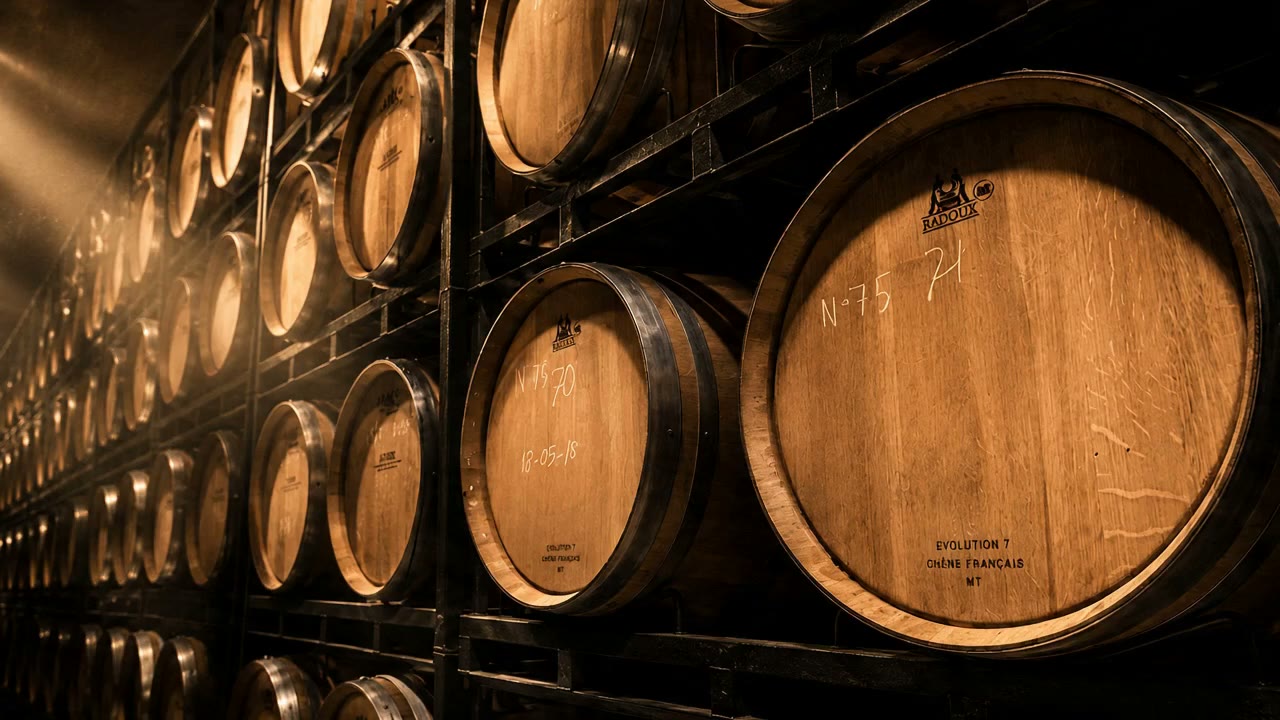
Grapes from the house’s own plots, picked by hand. Fermentation with the vineyard’s own yeast. No oenological products. Sulphur as the only addition. Ageing in French oak and bottling when the wine is ready, not when the calendar says so.
That is all. Whether it deserves the word is for whoever drinks it to decide.
IV · Vegan, and certified
No wine passed through egg white, milk or fish.
Wine is not obviously an animal product, and yet a great deal of it is clarified with animal proteins: egg white, casein from milk, isinglass from fish bladder, gelatine. They work — they drag the solids down and leave the wine bright — and they leave no trace on the label.
Nothing of the kind is used here, because nothing is used at all: the wine settles by gravity and time, which is slower and does not need a substitute. The V-Label certification only puts a seal on what was already the practice.
V · Ribera del Duero
The appellation, and what it does not decide.
Both wines come from plots registered with the Consejo Regulador of the D.O. Ribera del Duero, and are made inside it. The appellation guarantees origin, grape variety and a minimum: it does not decide the day of the harvest, nor the yeast, nor whether anything is added.
Those decisions belong to the house, and they are the ones described on this page.
Seals
V-Label vegan certification and the Consejo Regulador of the Denominación de Origen Ribera del Duero.
Valdecamellas
Two wines. Thirty plots across nineteen lieux-dits. Nothing added but sulphur.