
Valdecamellas Valdecamellas
Valdecamellas · Ribera del Duero

THE VINEYARD

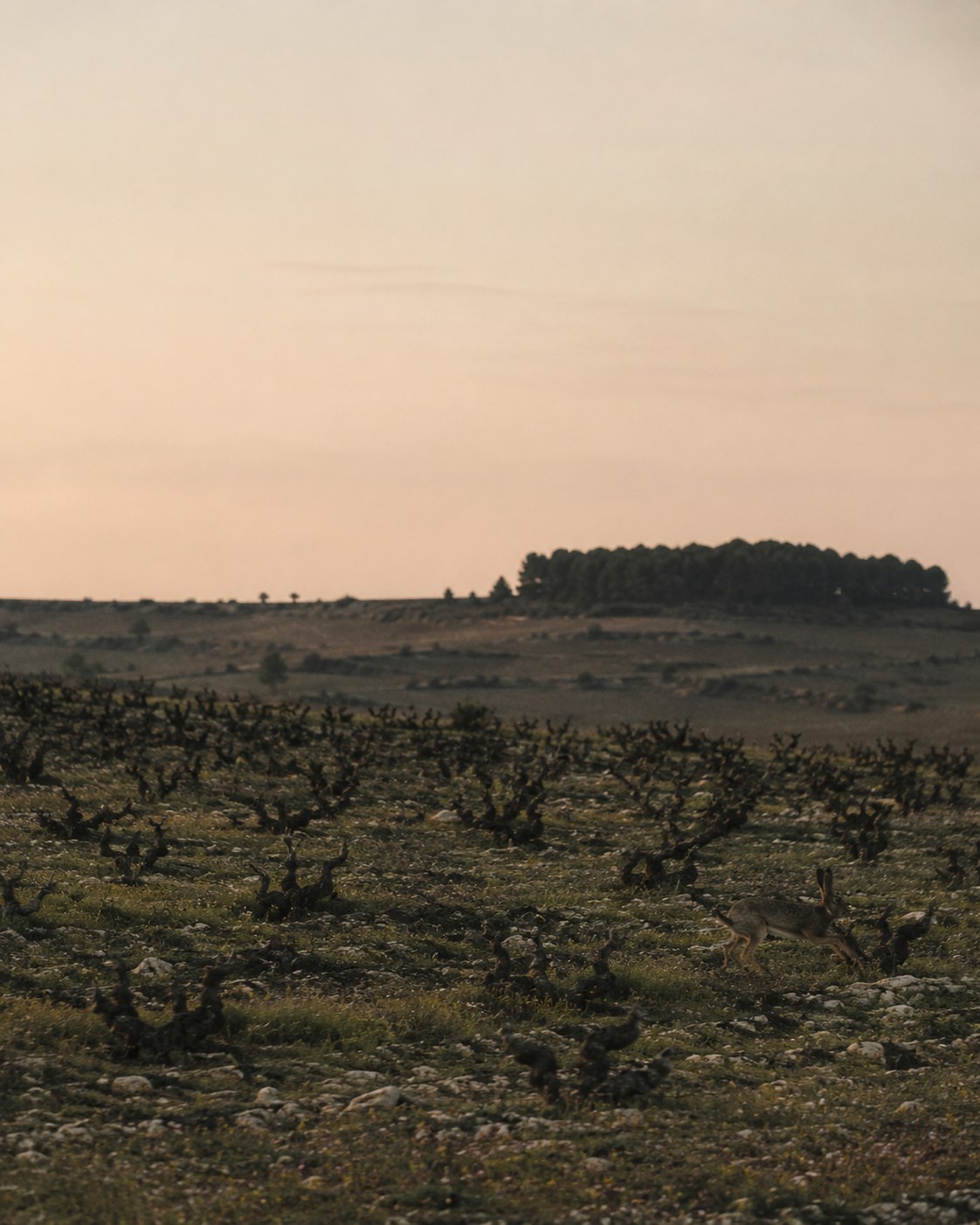
nineteen lieux-dits of Tempranillo and Albillo Mayor between 830 and 870 metres above sea level, where time is measured in harvests and every vine tells a story.
Scroll
Winegrowing heritage
nineteen lieux-dits

A living
heritage

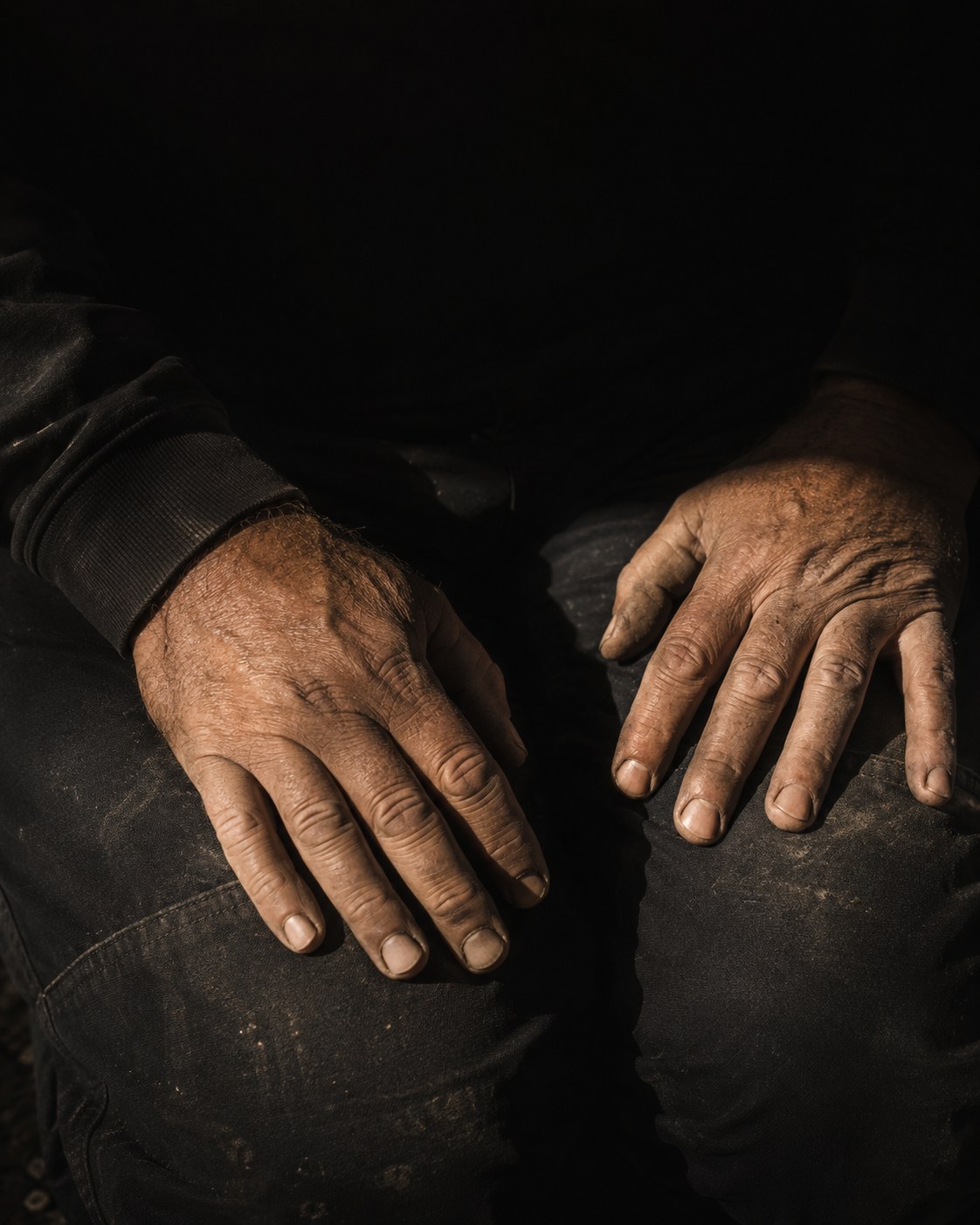
The vineyards of Valdecamellas cover nineteen lieux-dits — thirty plots in all — spread across three privileged municipalities: Fresnillo de las Dueñas, Fuentespina and Fuentelcésped. Each lieu-dit is an old field name covering one to four adjoining plots; the house works them, picks them and records them under that name. A high percentage of the plots are smaller than one hectare, revealing a fragmented vineyard that has to be worked one plot at a time, on a human scale, by the same hands every year.

Hidden among these plots are true treasures: century-old vineyards that survived the devastating phylloxera plague that swept across Europe in the late 19th century. These are ungrafted vines, a genetic heritage of incalculable value that brings unrepeatable complexity and depth to our wines.

80% of the vineyard has an average age of more than 50 years. These vines have learned to speak with the land, sinking their roots deep in search of water and minerals, and producing low yields of extraordinary concentration. Every plot has its name, its story, its microclimate.

0plotsMicro-plots
0yearsAverage age
0Municipalities
The terroir

Where the soil
speaks

Our vineyards are planted on sandy loam soils made up of sand (63-67%), silt (19-23%) and clay (13-16%). They are well-drained soils, poor in nutrients and organic matter, forcing the vine to work extremely hard. The root penetrates deeply in search of water and minerals, and that struggle becomes small grapes with thick skins and extraordinary intensity.
Sand65%
Silt21%
Clay15%
800–950m Altitude · Among the highest vineyards in the Ribera

At this elevation, nights are cool even in midsummer. The daily temperature swing can exceed 20°C: warm days encourage ripening, while cold nights preserve the grape's natural acidity. This contrast is the secret of our wines: concentration without losing freshness, power without losing elegance. It is what the French call terroir and what we simply call our land.

The terroir
Tinta Fina

The queen
of the Ribera

Two varieties and no others. Tempranillo — Tinta del País here — for the red, and Albillo Mayor, the native white grape the appellation only admitted in November 2019, for the white that carries the family name.
High-altitude Tempranillo develops an exceptionally thick skin thanks to intense solar radiation and cool nights. This skin concentrates polyphenols — tannins and anthocyanins — in greater quantities than in lower areas. Slow ripening at this altitude allows the tannins to polymerize naturally, becoming sweeter, silkier and more elegant on the palate.

Each plot brings different nuances. The sandier plots give fragrant, delicate wines. Those with more clay give more structured, profound wines. It would be fairer to speak of Tempranillo in the plural: there are as many Tempranillos as there are plots, as many voices as there are vines. The same is true of the Albillo.

Extreme continental climate
Extreme continental

Forged
by climate

The climate of Ribera del Duero is extreme continental with Atlantic influence. Winters are long and harsh, with frequent frosts that can fall to -15°C. Summers are dry and hot, with daytime temperatures above 35°C.

0h
Sun per year
0l/m²
Rainfall
0°C
Temperature swing

Annual rainfall barely reaches 450 liters per square meter, concentrated mainly in spring and autumn. Our vineyards receive more than 2,400 hours of sunshine per year, an intense irradiation that, combined with altitude, intensifies photosynthesis and the accumulation of aromatic and polyphenolic compounds in the grape.

Nine months of winter and three of hell, says the Castilian proverb. That climatic rigor, which makes life difficult for the vine, is paradoxically what makes our wines great. The stressed vine, the vine that struggles, is the one that produces the noblest grapes. It is not an easy land, neither for the winegrower nor for the vine. But precisely that hardness chisels wines of strong personality, profound and capable of aging for decades in bottle without losing freshness or character.

From January to October

A year in the vineyard

Ten months of patient work in which every gesture on the vine becomes, much later, a glass of wine.

January · FebruaryWinter pruning
With the vines dormant, the winegrowers shape the plant, selecting the canes that will bear the best clusters.
Click to explore
March · AprilBleeding and budbreak
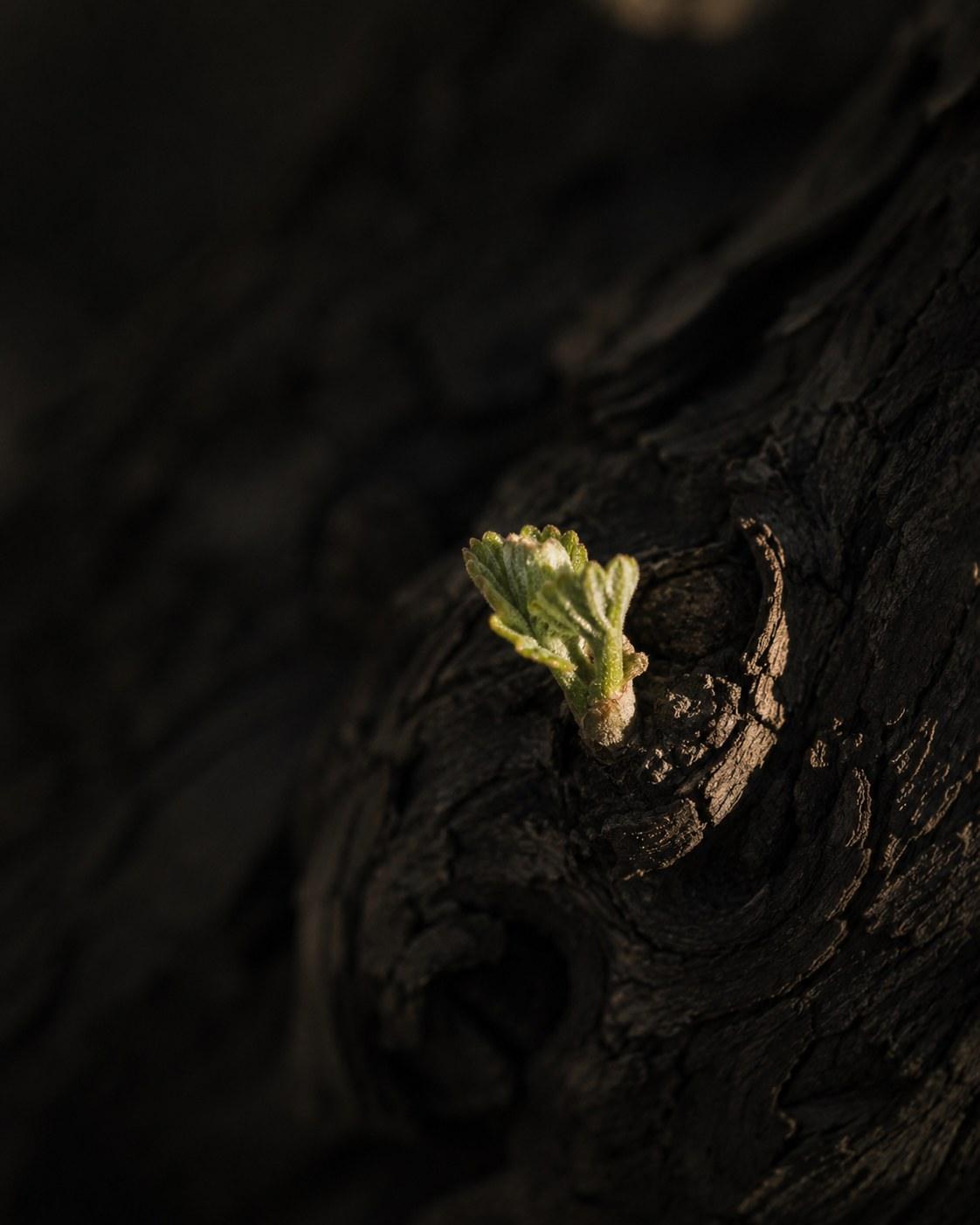
Sap begins to flow, buds swell and the first green shoots appear. It is a critical moment: a late frost can destroy the harvest.
Click to explore
May · JuneFlowering and fruit set
The vine's tiny flowers are pollinated and become small berries. Shoot thinning and cluster thinning are carried out.
Click to explore
July · AugustVeraison
The grapes change color, moving from green to deep purple. Sugar accumulation and phenolic ripening begin.
Click to explore
August · SeptemberThe harvest
The culminating moment of the year. Nineteen lieux-dits do not ripen on the same day: each one is picked at its own point and brought in within the hour.
Click to explore

And then, when the last crate enters the winery, another cycle begins — the wine cycle. But that is another story.