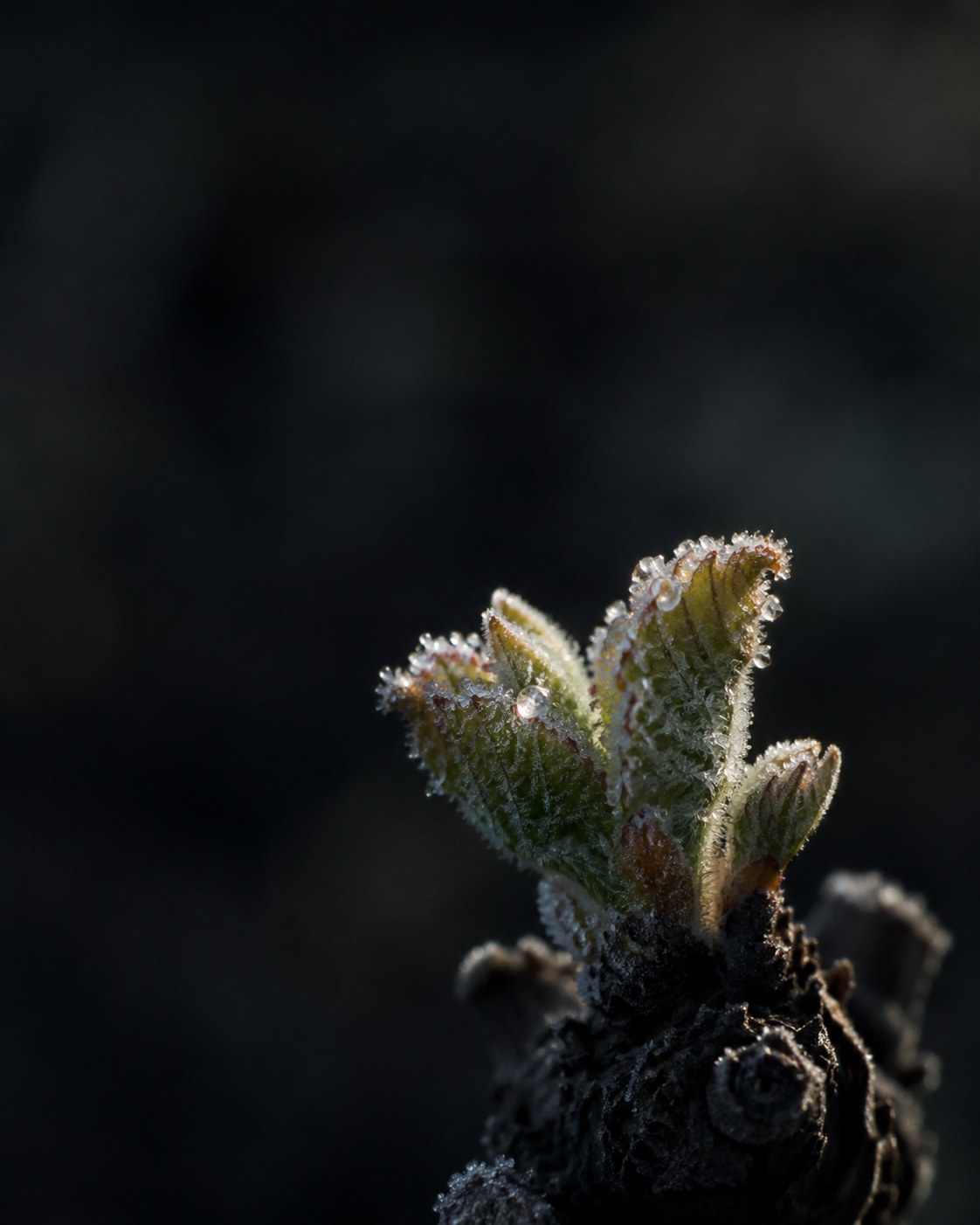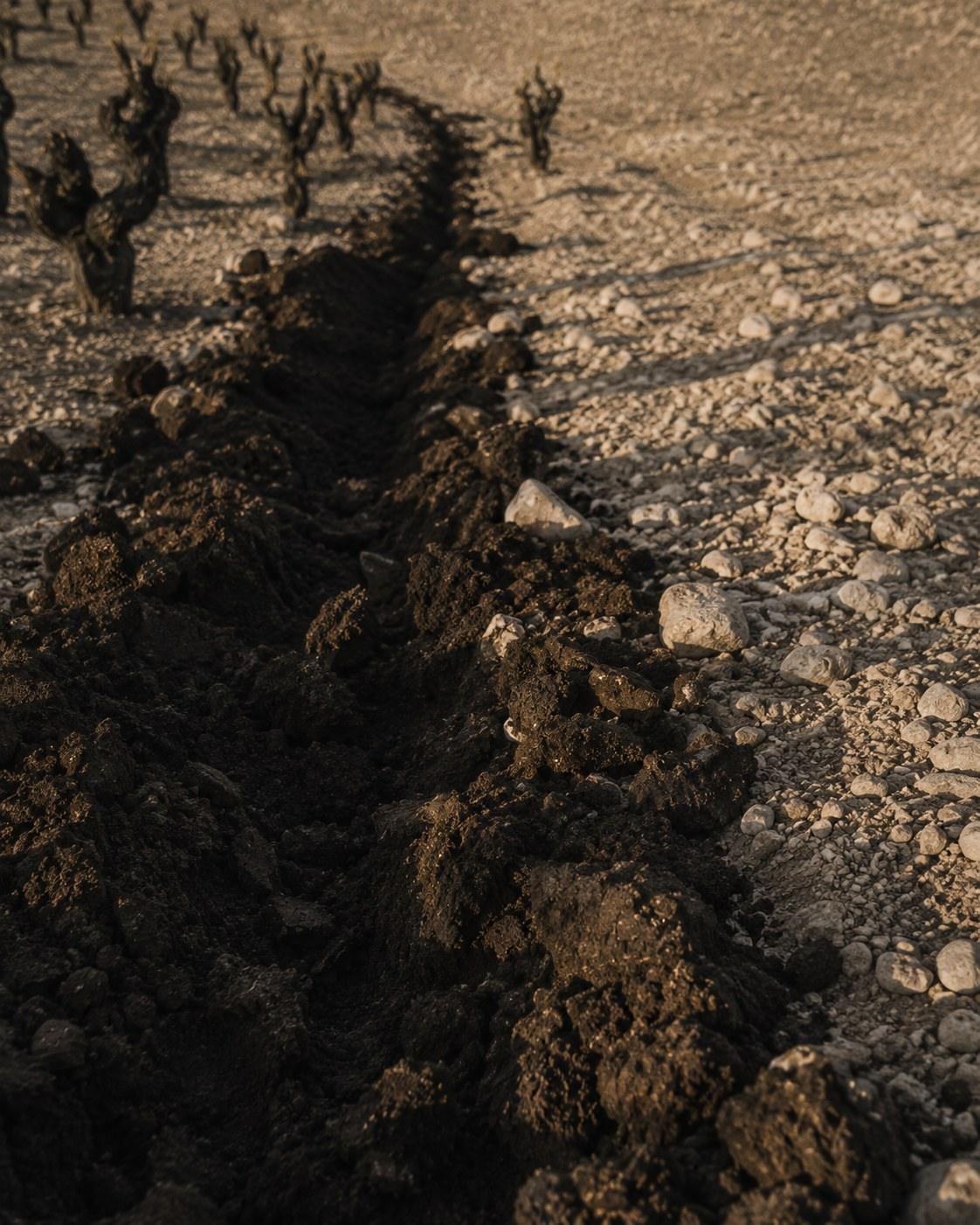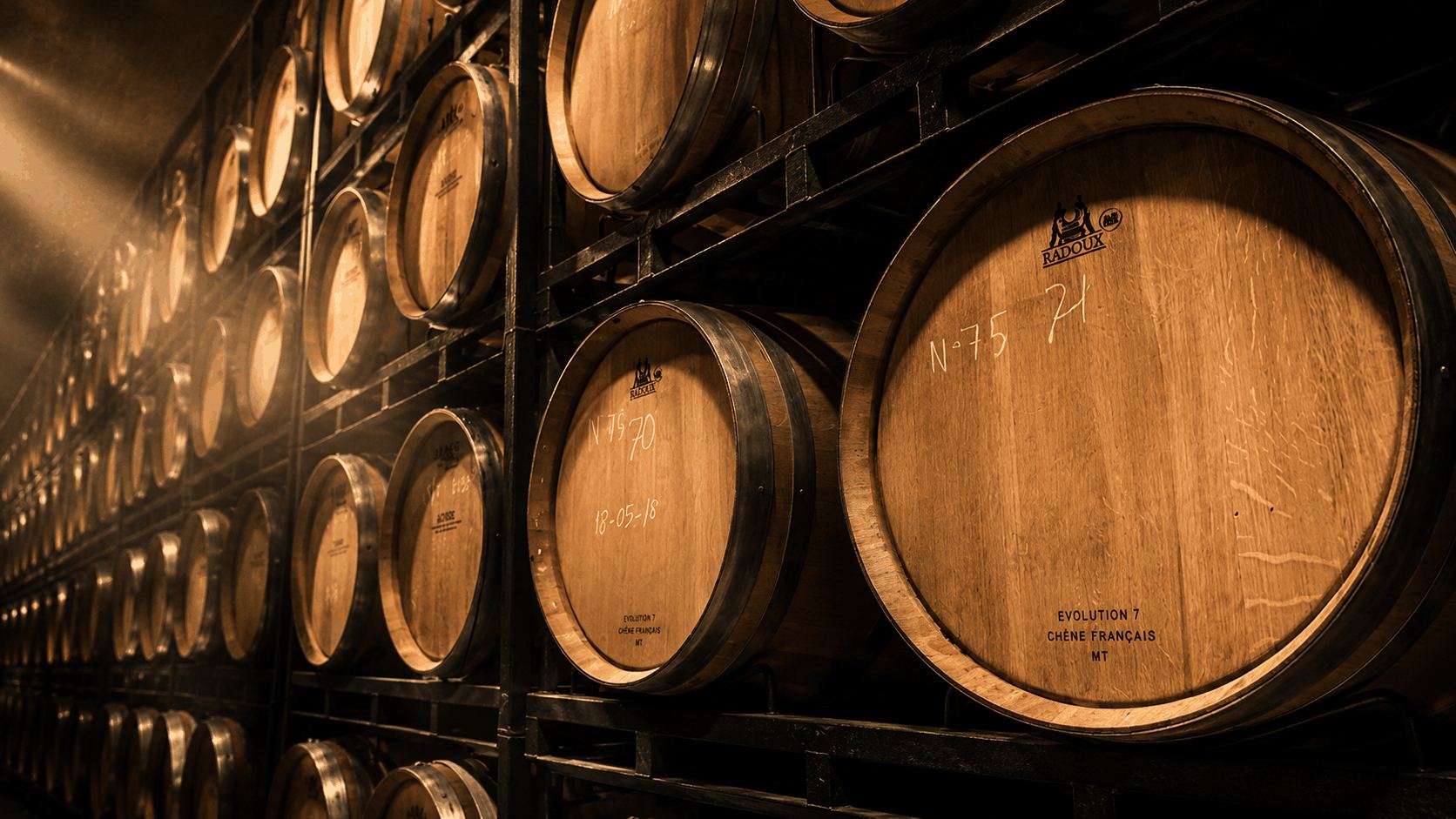
The grape flower is green, two millimetres across, and has no petals to speak of — or rather it has five, fused into a little cap that does not open but is pushed off from below and falls1. What is left standing is the reproductive part, bare.
It does not need to be seen. Vitis vinifera pollinates itself: the pollen has a few millimetres to travel and no insect is required. There is no reward on offer and none is needed.
So flowering passes almost unremarked. A visitor in the second week of June walks through a vineyard doing the single most decisive thing it will do all year and sees green.
The number of bunches was settled last summer, in buds formed for this year while last year's crop was still hanging. What is being settled now is how many flowers on each of those bunches become berries.
A bunch carries something like a hundred and fifty flowers and will usually set between a third and a half of them. That proportion is the whole game. The difference between a good year and a short one is often not disease or drought in August but a fortnight of bad weather in June that nobody photographed.
This is why a grower talking in June sounds evasive. Asked how the year looks, the honest answer is that the year has just been decided and nobody will know by how much until the fruit is on the scales in September.
And it is not recoverable. There is no second flowering, no way to add berries later. From the end of June the crop is a fixed number and every remaining decision is about ripening it or reducing it.
The first is coulure — corrimiento — when flowers simply fail and drop, leaving a bunch with a third of its berries and gaps you can see through. It happens when the weather turns cold and wet at exactly the wrong moment, or when the shoot is growing so vigorously that it keeps the sugars for itself and starves the flower.
The second is millerandage — millerandaje — when the berries set but unevenly: a bunch of normal grapes with small seedless ones scattered among them, like shot2.
Growers complain about both and quietly like the second. A millerandé bunch is smaller, looser, better aired, and its little berries have more skin for their volume — which is where colour and tannin live. It is a defect that improves the wine and reduces the cheque.
What flowering wants is warm, dry and still: twenty degrees or above, no rain, no wind hard enough to knock the caps around. Given that, the whole business takes eight to ten days and nobody thinks about it again.
What ruins it is cold — below fifteen degrees the pollen tube grows too slowly and the flower gives up — or persistent rain, which sticks the cap to the flower so it never comes clear.
At nine hundred metres on the northern meseta, a cold snap in the second week of June is not unusual. It is one of the reasons the crop here is small in a way that has nothing to do with how the vineyard is farmed.
Flowering runs uphill, like everything else here. The plots on the vega at 830 metres begin four or five days before the ones on the edge of the páramo at 870, and that gap holds all season: it is the same gap that appears again in September when the picking dates are set.
In a bad June that spread is a form of insurance. A cold week that catches the low plots in full flower may catch the high ones before they have started, and the two halves of the estate fail differently.
It is the only advantage of owning nineteen small plots scattered across three villages instead of one large one, and in some years it is the difference between a short harvest and no harvest.
The date the first caps fall, per plot. The date half the flowers are open. The weather of those days, in plain words: warm and still, or cold and blowing3.
From the midpoint of flowering it is possible to make a first, rough guess at the picking date — a hundred days or thereabouts, adjusted by everything the summer does. The guess is wrong most years and it is the first number anybody has, which makes it worth having.
And then nothing happens for six weeks. The berries are set, small and hard and green, the shoots grow past them, and the vineyard turns into a quiet place that is only waiting.