The tractor goes between the rows in March or April and turns a shallow furrow, ten or fifteen centimetres, no deeper. Done well it takes a morning per hectare and leaves the ground looking combed.
It is not done to feed the vine. It is done for water. Every weed growing between the rows in April is drinking, and here rain is four hundred and fifty litres a year and most of it arrives when it is not wanted. Removing the competition in spring is removing a mouth.
A pass in early spring also warms the ground. Broken, darker soil takes more sun and gives the roots a few days of a head start, which on the high plots — where everything is already ten days late — is not a small gift.
There is a second reason, less obvious. Breaking the crust interrupts the fine channels through which soil water climbs and evaporates. A loose top layer acts as a lid. The old hands call the tilled surface a dry mulch and they are describing real physics1.
It costs structure. Every pass breaks aggregates that took years to form, and on a slope after a summer storm the loosened soil is the soil that leaves. Ribera can deliver thirty litres in an hour; a tilled slope on that day loses material that will not come back in a lifetime.
It costs life. The top twenty centimetres are where the fungi, the worms and the roots of everything else live, and turning them over twice a year is an event those populations never quite recover from.
And it costs roots. The vine puts fine feeder roots into that top layer because it is the richest, and the plough cuts them. The plant answers by rooting deeper, which is often presented as a benefit — and is, up to a point, and is also a plant repairing damage.
The alternative is to sow between the rows and leave it: a mixture of grasses and legumes, cut two or three times, never turned. The soil builds structure, holds together in storms, and gains organic matter year on year2.
On a vineyard with water it is plainly the better answer, and in wetter regions the argument is over. The cover crop wins.
Here it is not over, because the cover crop drinks. In a wet spring it drinks water the vine would not have used anyway and everyone is happy. In a dry one it drinks the water that was the whole reserve, and the vine shuts down in July with the grapes half made.
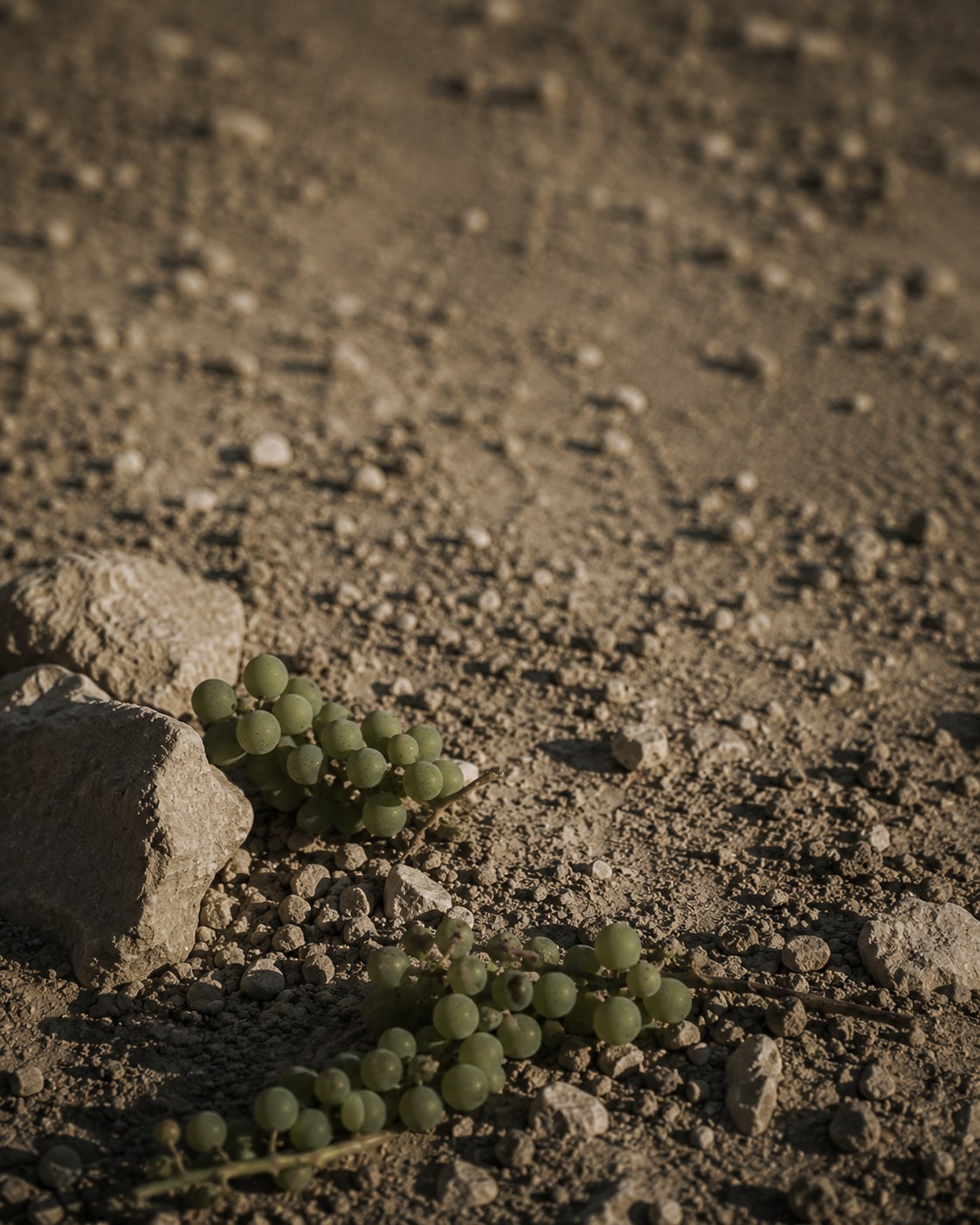
We do both, by plot, and the decision is made in March rather than in advance. The plots on the deep clays of Fresnillo, which hold moisture well, carry a cover crop through the spring and it is cut low in May. The plots on the gravel terraces of Fuentespina, which drain in minutes and hold nothing, are ploughed.
That is not a compromise between two doctrines. It is the recognition that the two arguments apply to different soils, and that we happen to own both.
The decision is written down with the reason, because in a wet March it is very easy to be generous with the cover crop and to have forgotten, by the drought of July, that the choice was ever made.
The one rule kept everywhere is depth. Nothing goes below fifteen centimetres. Deep ploughing solves nothing that shallow ploughing does not, and it cuts roots that matter.
Between the vines, where a tractor cannot reach without tearing trunks, the work is still done with a hand tool or with an intercep — a blade on a feeler arm that swings out of the way when it touches a stock and swings back after3.
It is slow. A hectare of old bush vines, planted irregularly because they were planted by people walking, takes the better part of a day.
Nobody has invented anything better for a vineyard planted in 1924, and that is not nostalgia: it is a machinery problem nobody has had a commercial reason to solve, because there are not many vineyards left that are shaped like this one.
Twenty years ago ploughing was what careless growers did and the cover crop was the modern answer. Ten years ago the pendulum came back, as drought made the competition real. It will move again.
What has not changed is that both sides are describing something true. The soil is better left alone; the vine needs the water. On a dry, poor, high vineyard those two facts are simply in conflict, and no amount of conviction resolves them.
So the plot decides, and the year decides, and the notebook records which was done and what followed. That is not a doctrine. It is the only honest position available.