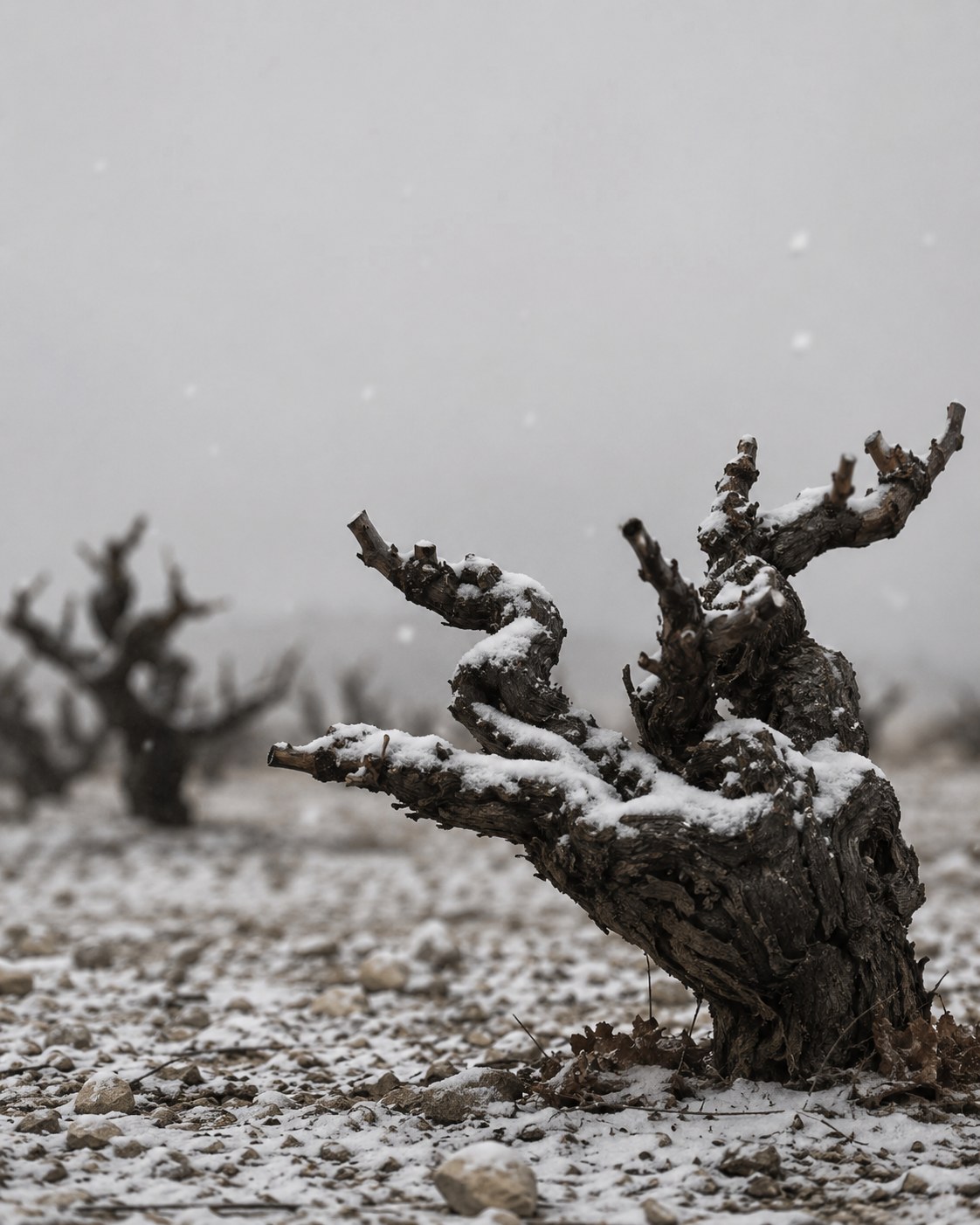
The first thing to understand about water in a vineyard is that most of the rain that falls on it is of no use to it. It runs off if the slope is steep, it evaporates if the sun follows the shower, it drains straight through if the soil is sandy enough. What is left — what the ground manages to hold within reach of a root — is a surprisingly small fraction of the total1.
That fraction is the only thing that matters. A year of 500 millimetres can be a dry year and a year of 400 can be a comfortable one, depending on when the rain came and what the soil was able to do with it. The number on the rain gauge is a headline; the useful figure is underground and nobody photographs it.
Between November and February this land does almost all of its saving. The vine is dormant and drinks nothing, the sun is low, evaporation is minimal, and the rain that arrives has time to soak in rather than run away. It is the only stretch of the year in which the soil can fill up in peace.
Clay holds water and gives it back slowly. Its particles are small and flat, the gaps between them are narrow, and the water clings there against gravity. A clay soil can store a great deal — and can also keep so tight a grip that the root has to work for every drop.
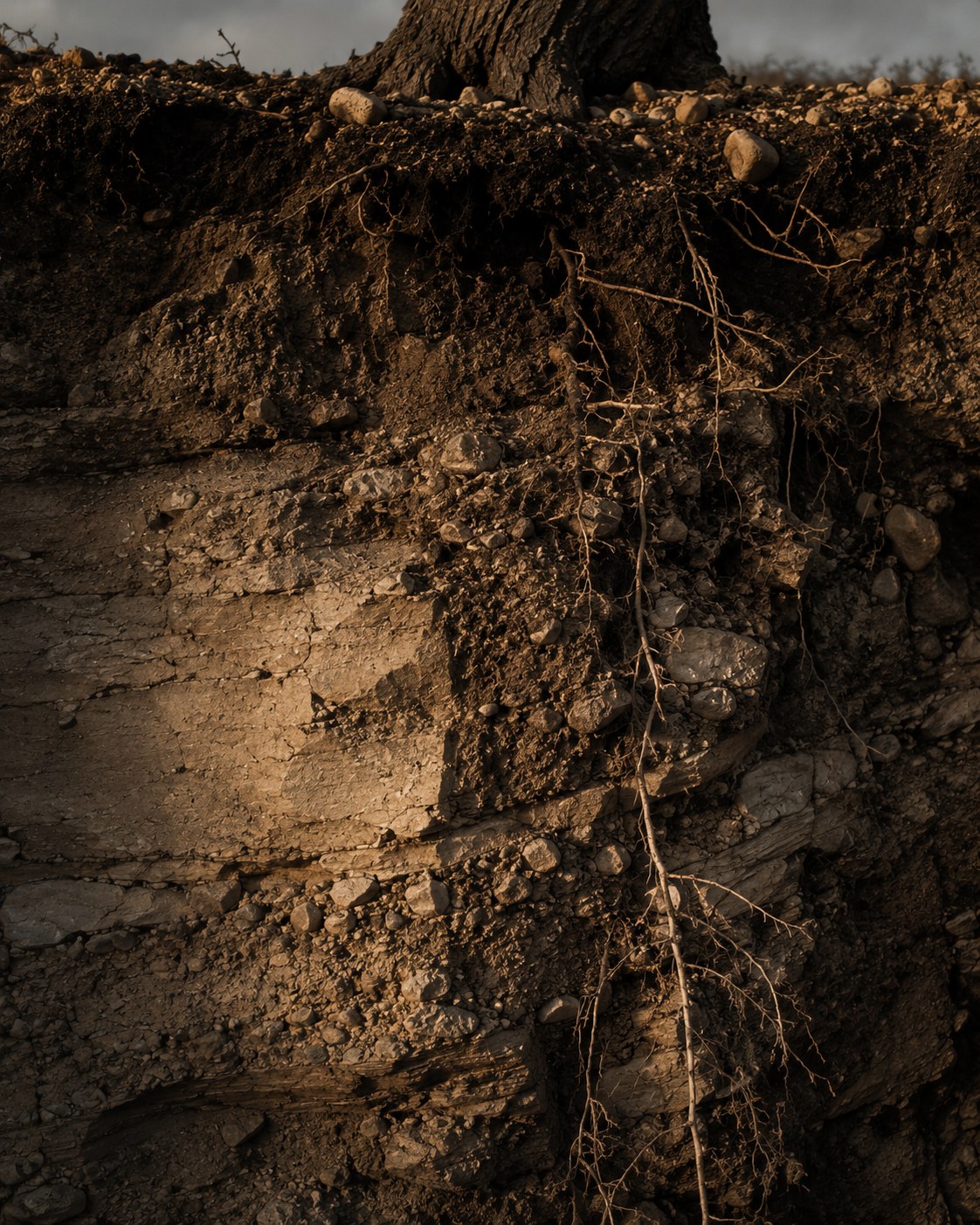
Sand does the opposite. Wide pores, fast drainage: what falls on sand goes down quickly and keeps going. It stores little, but what it does store is easy to take. Carpio is sand over limestone, and that is precisely why its vines send roots so far down: there is no reserve to speak of within the first metre.
Limestone sits in between and adds something the others do not. It fractures. Water slips into the cracks, stays cool there, out of reach of the sun, and comes back up later than anyone expects. A plot on fractured limestone can look thirsty in July and still be drinking in August.
Our nineteen lieux-dits hold all three in shifting proportion, sometimes within the same hillside. That is not a curiosity for a technical sheet. It is the reason the harvest cannot be a single date.
There is a way to put a number on this, and it is less mysterious than it sounds. Useful water is the difference between two states of the soil: field capacity, when it holds all it can against gravity2, and the wilting point, below which the vine can no longer extract anything even though the water is still down there3.
The gap between those two figures, multiplied by the depth the roots actually reach, gives the reserve: the millimetres of water a plot has available for the whole season. On our ground it ranges roughly from 60 mm on the thinnest limestone plots to 150 or more where the clay runs deep.
Sixty millimetres is not much. It is what a vine on the shallowest plots has to live on from May to September, plus whatever falls in between. It explains, better than any story about character or terroir, why those plots give small berries, thick skins and half the crop of the plot next door.
"A dry August is not decided in August. It is decided in December, and by then there is nothing left to do about it. You can only have listened earlier." — Trifón
Here is the part that matters and that almost nobody says out loud: by the time the summer arrives, the important decisions about water have already been taken. Not by us — by November, December and January.
If the winter rain fell steadily and the soil was in a condition to take it in, the reserve fills and the vine has a cushion. If the winter was dry, or if the rain came in violent bursts that ran off a hard surface without soaking in, the vine begins the season already borrowing. In August, when the plant is asking for everything at once and there is nothing in the sky, the difference between those two winters is the difference between concentration and stress.
A stressed vine is not the same as a vine under tension. Tension is what we want: mild, gradual restriction that stops shoot growth and sends the plant into ripening. Stress is the vine shutting down — closing its stomata, halting photosynthesis, leaving the grape half made. The line between them is thin, and it is drawn in winter.
None of this happens at the scale of an estate. It happens at the scale of a plot, and we have nineteen of them across three villages, each with its own soil, its own slope, its own depth of root and therefore its own balance sheet.
Twice a year we go out with an auger and take the ground apart in five of them, in November and again in March4. It is a crude measurement and it does not need to be anything else: what we are after is not precision to the millimetre but the direction of travel. Is this plot filling up? Is it emptying earlier than last year? Has that deep clay finally taken the rain in or is it still sealed at the surface?
Out of that comes a working order for the following summer: which plots can be left alone, which ones will need their crop reduced, which ones will be picked first whatever the sugars say. It is arithmetic, not intuition — though after eighty growing cycles the arithmetic and the intuition tend to agree.
The temptation, once you have the numbers, is to think the problem is solved. It is not. A soil can only hold what its structure allows, and structure is slow to build and quick to lose. Compacted ground refuses water no matter how much falls on it. Ground without organic matter lets it through and keeps nothing.
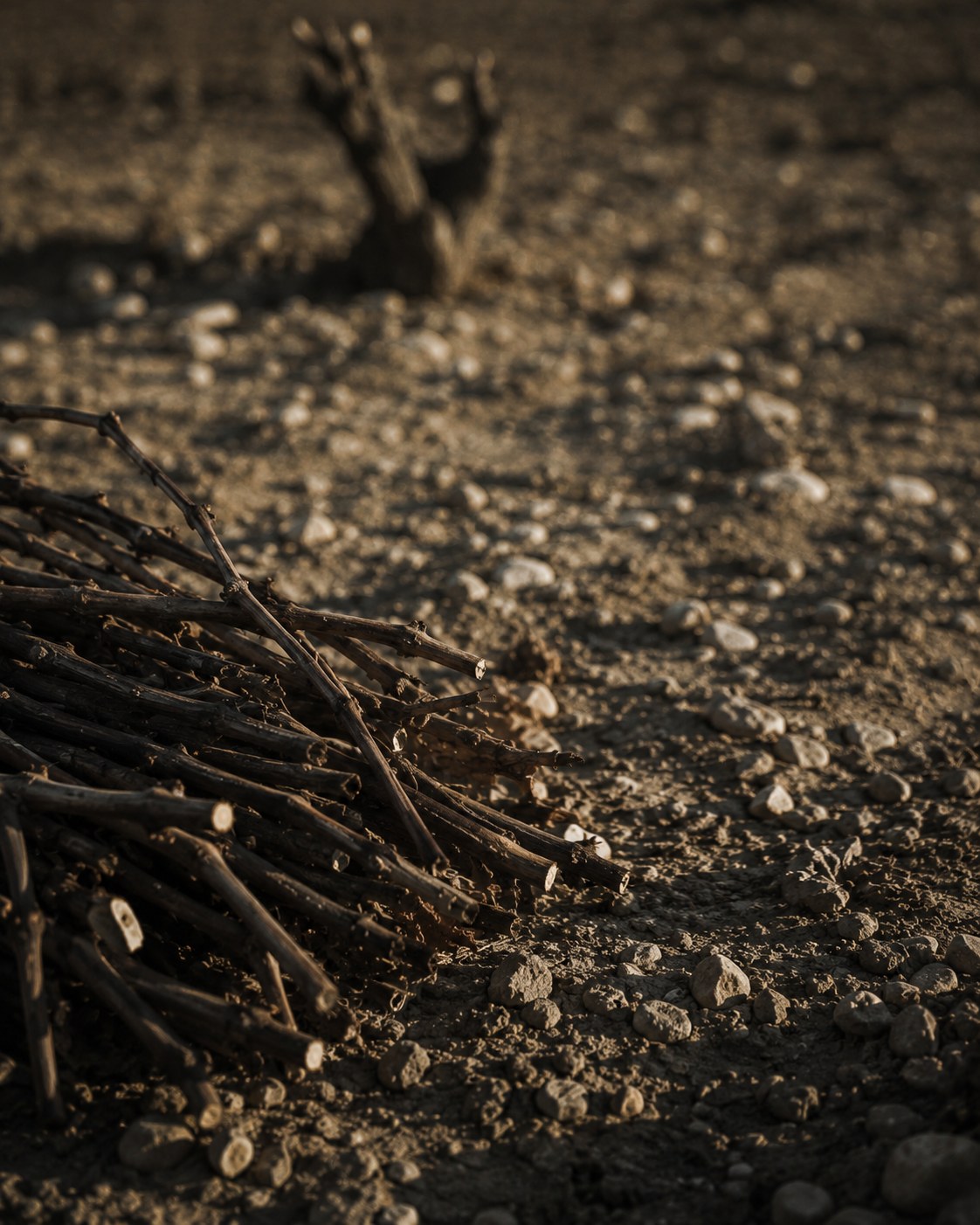
So the work goes on all year, and most of it looks like nothing: cover crops that keep the surface open, machinery kept off the plots when they are wet, pruning wood returned to the ground rather than burned. None of it shows in a glass on its own. All of it decides how much of the winter the soil is able to keep.
The vineyard, in the end, is a device for storing one season inside another. The wine we open in five years contains a December that nobody remembers.