The year brings about four hundred and fifty litres per square metre. That is little — half of what a vine would take if offered — and the shortage is not the real problem. The timing is.
Most of it falls between October and May, when the vine is asleep or barely started. July and August together may bring thirty litres, and those often arrive in one storm that runs off a dry slope without soaking in.
A storm on baked ground is close to useless. The surface seals, the water runs to the low corner of the plot, and an afternoon that delivered twenty litres on paper delivers three to the roots.
So the summer is not watered by summer rain. It is watered by whatever the ground managed to keep from the winter, and the only question that matters about a plot in August is how much of that it kept.
Under the middle terrace, below the loam the plough turns and the red clays beneath it, there is a very thick body of clay laid down in a Miocene lake: not a stone in it, extremely dense, and packed with pores too fine to drain1.
Water that reaches it in February is still there in August, because it physically cannot leave except through a root. That is what a reserve is: not a reservoir, but a material that will not let go.
The cost is that it will not let go easily for the vine either. The roots have to pull hard against that grip, and they only reach it because the surface gives out first and they were forced to keep going.
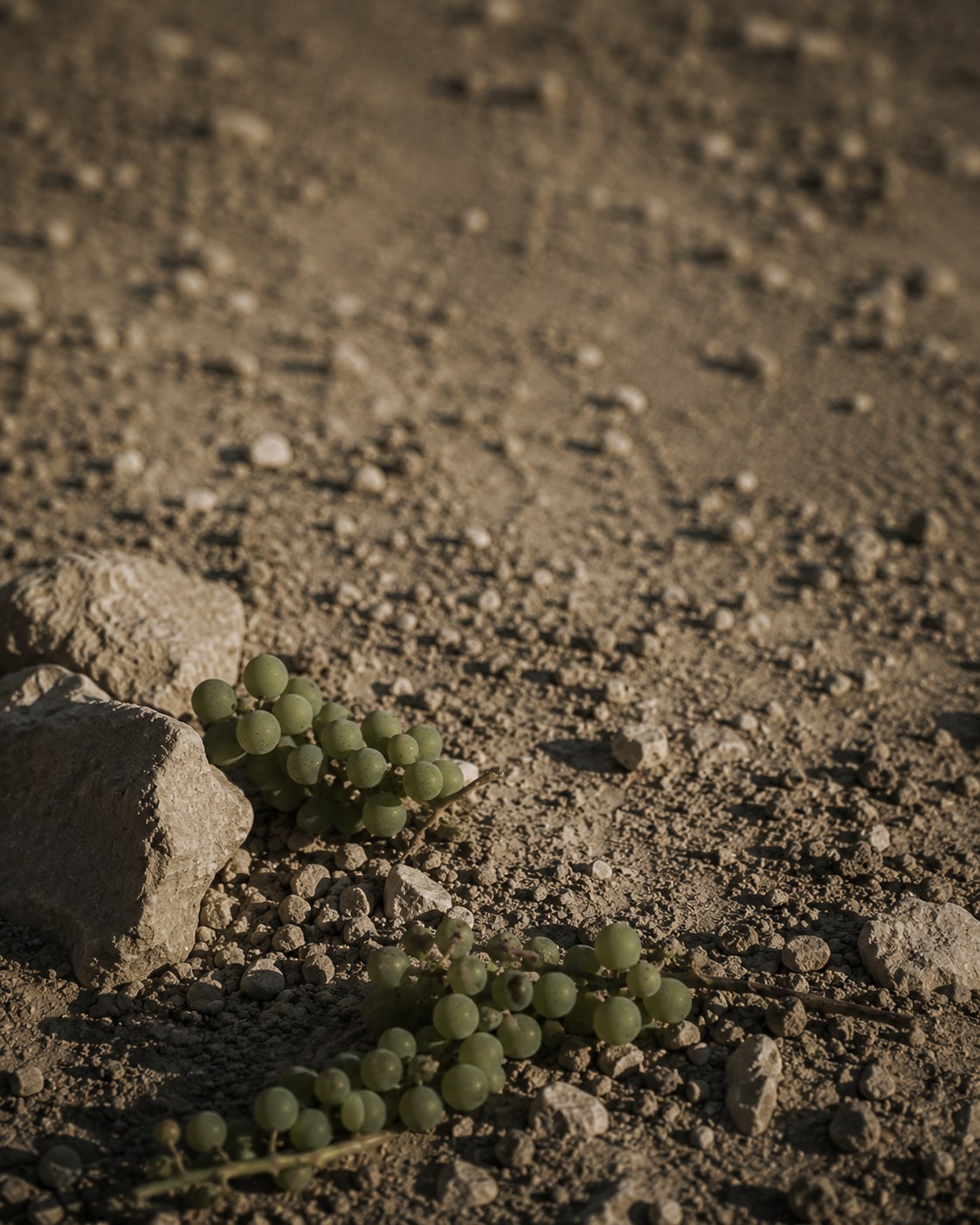
Not every plot sits on that. The terraces the river built out of rounded stone and gravel — the ones nearest the water, in Fuentespina especially — are the opposite material: total drainage, immediate, holding nothing.
A hundred litres of March rain falls on a gravel terrace and is gone below the root zone within a day. The same rain on the deep clays two kilometres away is still available in high summer.
Which is not to say the gravel plots are poor. They ripen early and evenly and give wines of great immediate charm; they simply cannot be asked to carry a drought, and in a dry year they are picked before they would otherwise be.
This is the single largest difference between our plots, larger than variety or age or exposure, and it is invisible. Two vineyards that look identical from the road are running two completely different summers.
Mild water stress is not a disaster; it is the point. A vine with unlimited water grows leaves and makes dilute fruit. A vine held slightly short stops growing shoots, sends what it has to the berries, and makes small thick-skinned grapes.
The signs are readable if you know them. The shoot tip straightens and stops curling — growth has ceased, which is exactly what is wanted after veraison. Tendrils dry from the end back2.
Beyond that it turns. Leaves at the base yellow and drop, the plant abandoning them to save water. Photosynthesis slows, then stalls, and the fruit simply stops ripening — sugar frozen where it was, acid still falling, and a wine that will taste unfinished and hot at once.
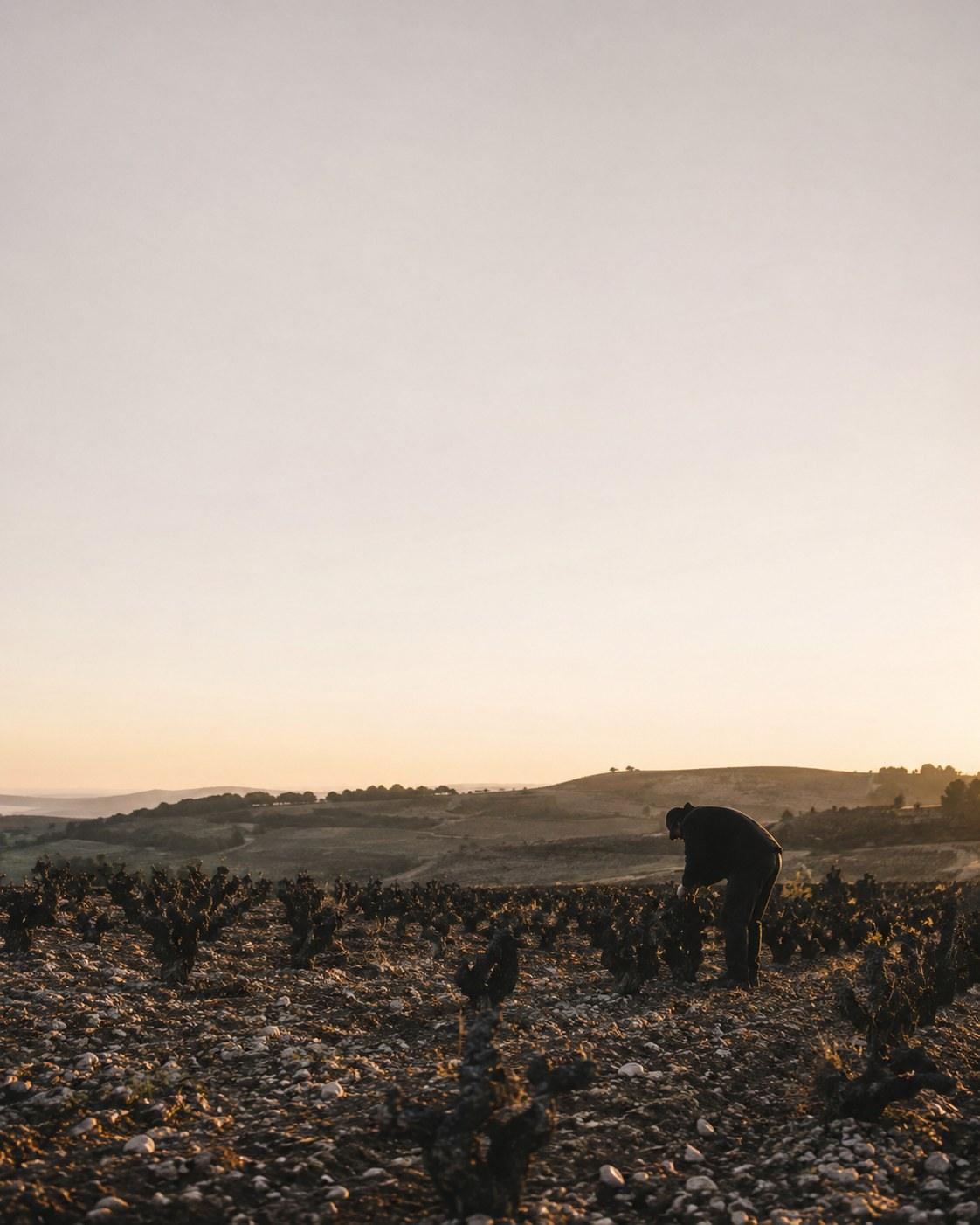
The vines planted in 1924 are still here for a reason that has nothing to do with sentiment. A century of roots is a century of exploration: they are into the deep clays, several metres down, in ground a young vine has not reached.
A plant established twenty years ago on the same soil is working the top metre and a half, which in a dry year is exactly the layer that empties first. The old vine and the young one are drinking from different places.
It is also why irrigating a young vineyard is a decision with a long tail: water delivered at the surface is a reason for the roots not to go looking, and a vine taught to drink at the surface will still be shallow in thirty years3.
None of this is visible from a road, and most of it is not visible from inside the plot either. It is read indirectly: the shoot tips in July, the colour of the basal leaves in August, whether the berries have gone soft or gone slack.
And it is read from the pit. Each of the nineteen lieux-dits has been opened and looked at down to two metres, and the note that matters is rarely about the topsoil — everyone has decent topsoil. It is about what is at the bottom: clay that holds, or stone that does not.
That single line, written once, explains more about how a plot behaves in a dry August than anything you can see standing in it.