On a day in early August the thermometer in the vineyard will read thirty-four or thirty-five degrees at four in the afternoon. It is genuinely hot: the stones are too hot to hold, work stops.
By five the next morning the same thermometer reads fourteen. In some years, twelve. The difference between the two is around twenty degrees, day after day, for most of the summer1.
Visitors get it wrong in both directions. They arrive in August dressed for a hot country and are cold by ten at night; they arrive in January expecting the same swing and find a grey, still, freezing day that never moves at all.
This is what people mean when they call the meseta a continental climate and it is the single most important fact about growing anything at this altitude, five hundred kilometres from any sea.
Three things, all of them local. The altitude: at nine hundred metres there is less atmosphere above to hold the day's heat in. The dryness: water vapour is what traps warmth overnight, and this air carries very little. And the distance from the sea, which removes the great thermal flywheel that keeps coastal nights mild.
Add a clear sky — which is the usual condition here, with something like two thousand four hundred hours of sun a year — and the ground radiates freely to space from the moment the sun goes.
The same physics that makes April dangerous makes August valuable. It is one mechanism, and whether it is a threat or a gift depends entirely on the month.
A grape at thirty degrees is respiring hard: burning malic acid as fuel, faster the hotter it gets. A grape at fourteen has all but stopped.
So the acid the berry accumulated in spring survives the summer here in a way it does not further south. The day builds sugar and colour; the night stops the loss. The wine ends up with ripeness and tension at the same time, which is difficult to achieve in a place that is warm around the clock2.
Aroma follows the same logic. The delicate volatile compounds that give a wine its lift are made in the skin and destroyed by heat, so a fruit that cools every night keeps a great deal that a fruit ripening at a constant twenty-five degrees would lose.
Colour benefits too. Anthocyanin production in the skin is favoured by warm days followed by cool nights, which is precisely the pattern on offer.
Thick skins are usually credited to poor soil and low yields, and both help. But the swing contributes in its own way: a fruit that spends the night cool loses less water overnight and stays smaller and firmer through the ripening.
Small berries have more skin for their volume, and skin is where colour, tannin and most of the aroma live. The proportion is not a detail; it is most of what separates one red from another.
The effect compounds with the poor ground. A vine with little water and cold nights makes a small berry twice over, and the two causes are not additive so much as multiplying: it is why the fruit here looks meagre on the vine and behaves generously in the tank.
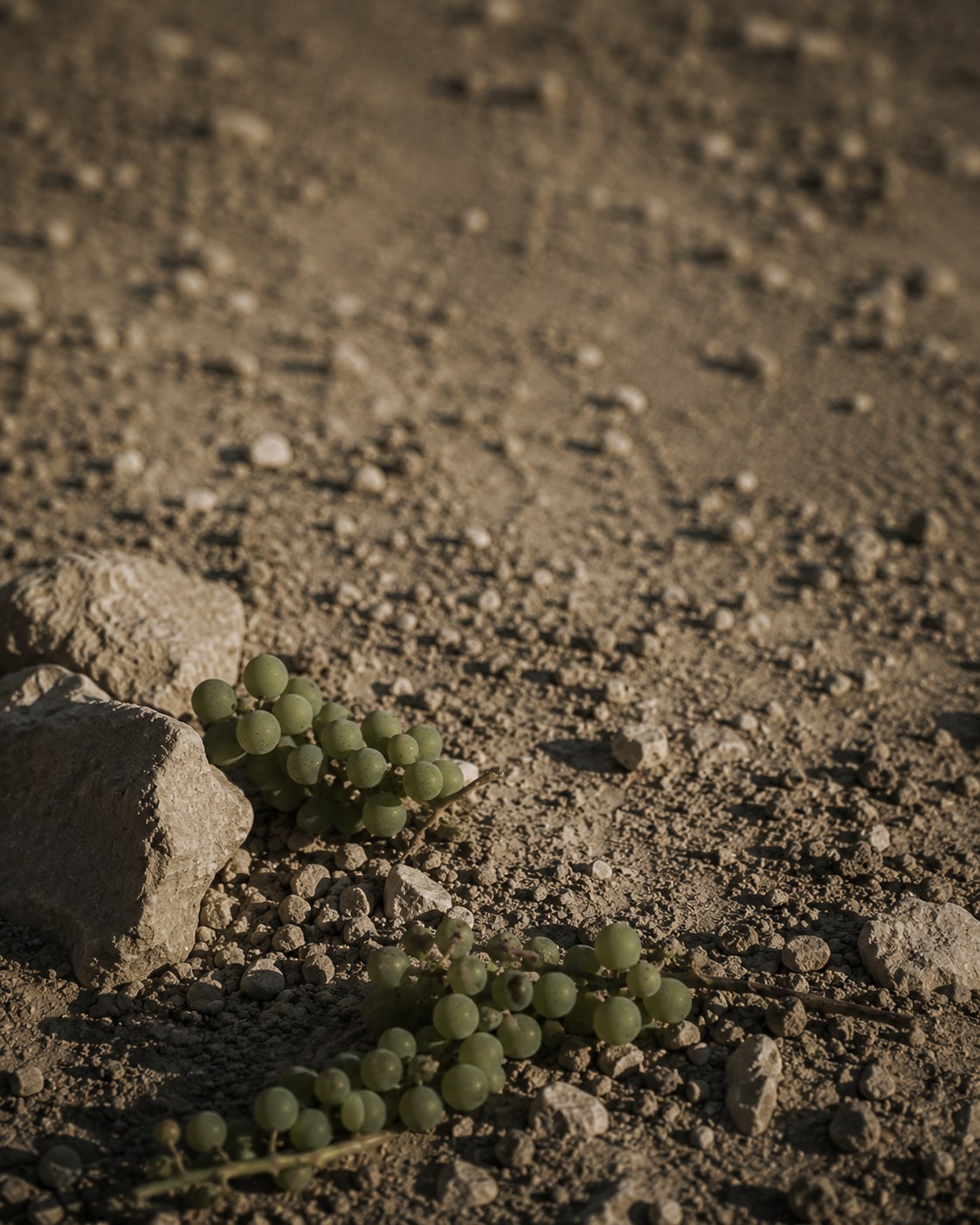
This is why the Tinto Fino grown here is not the same plant, in any practical sense, as the Tempranillo grown three hundred kilometres away in a milder place. Same variety, different animal.
The swing matters all summer and it matters most in September, when the nights lengthen and the fruit is doing its final assembly.
A warm September night is the worst weather of the year here. It costs acidity precisely when there is none to spare, and it is the reason a picking date can move forward by four days on the strength of a forecast.
A cold one buys time — and time, at the end of the season, is the most valuable thing available, because everything that is still incomplete in the berry needs days rather than heat3.
The fall is steeper the higher you go. On the edge of the páramo at 870 metres the nights run two or three degrees below the vega, and that gap widens in September as the season turns.
It is why the highest plots are the last picked and why they arrive with acidity the low ones cannot bring. They have spent the whole summer with longer, colder nights, burning less of what they made.
It also explains a thing that surprises visitors: the highest plots, which suffer most in April and ripen last, are the ones the cellar depends on for freshness. The same exposure that makes them fragile in spring is what makes them necessary in October.
One vineyard, four terraces, and on any August night four different minimum temperatures — which is the whole argument for keeping them separate all the way to the tank.