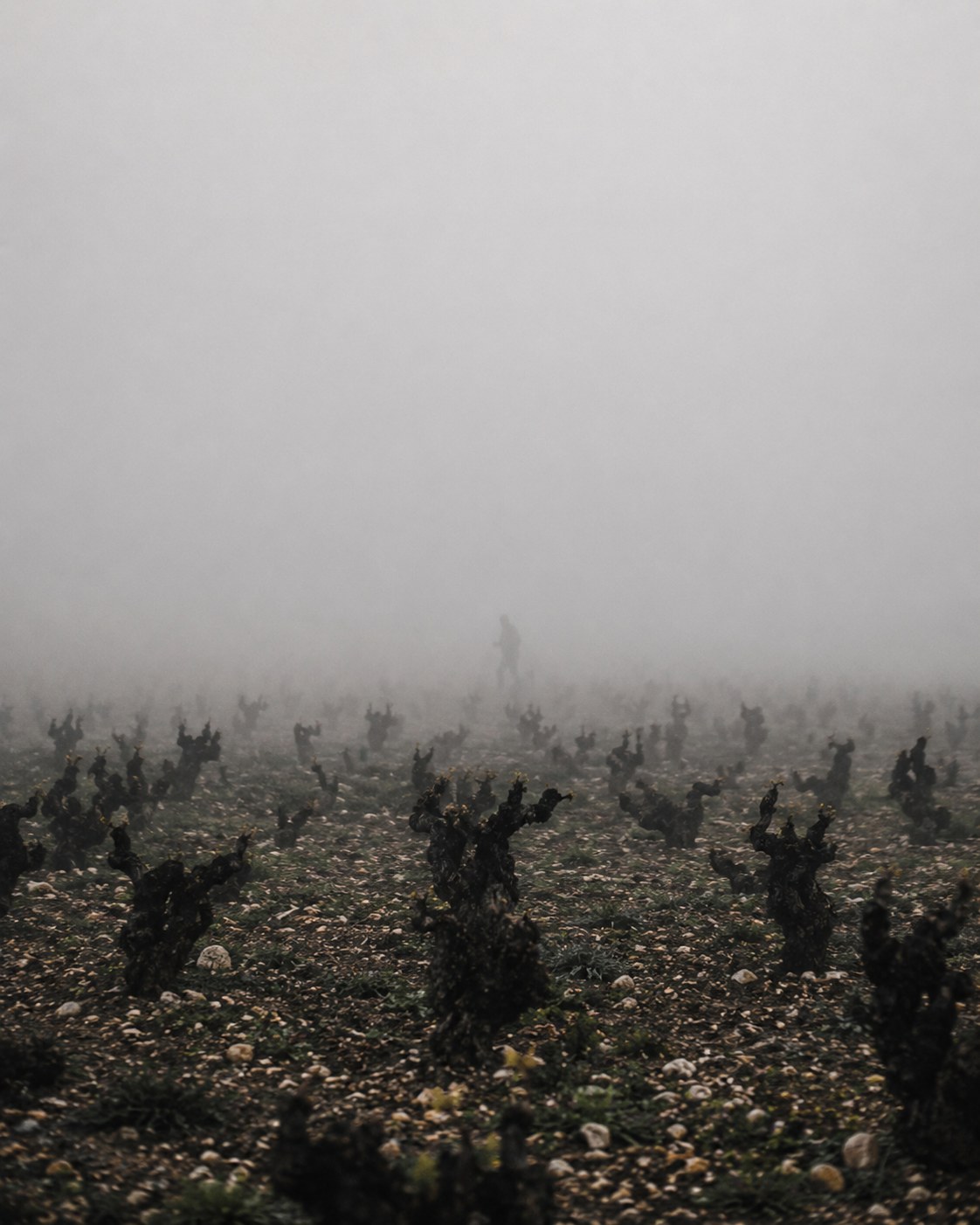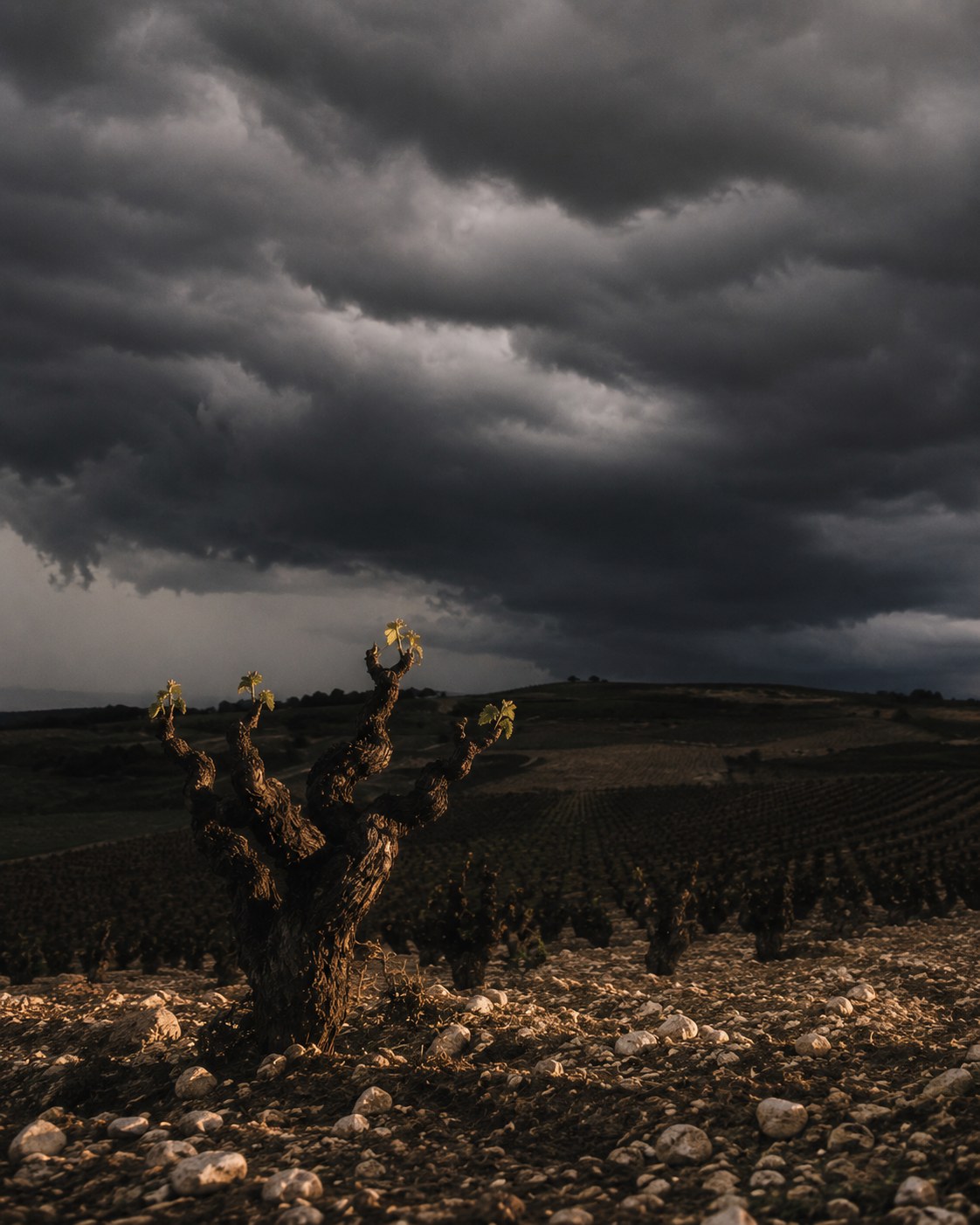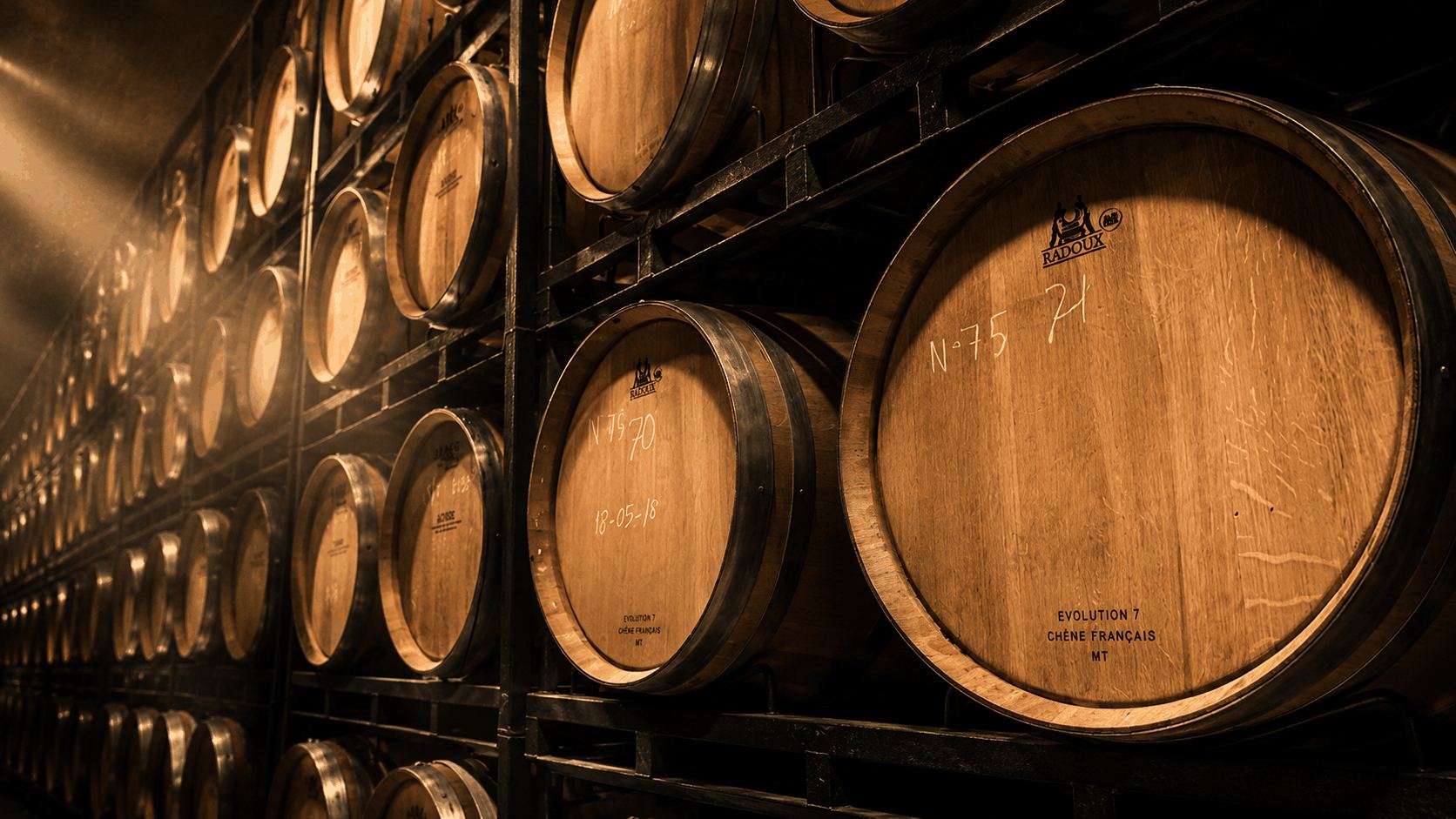
The label will say one thing, and the wine inside every bottle of that vintage will be identical. But before that, in the cellar, it was not one wine. It was thirty or forty separate ones, each in its own barrel, each drifting slowly away from the others1.
The differences are not imagined. Two barrels filled on the same morning from the same tank will taste distinguishable within six months. The wood came from different trees. One sits against the outside wall and runs a degree cooler. The seal on one head lets through a fraction more air than its neighbour.
Multiply that by eighteen months and you no longer have a wine ageing. You have a population of wines, related to one another, diverging at different speeds.
So somebody has to taste them. Not the blend, not a representative sample: each barrel, individually, with a glass and a pipette and a piece of chalk, several times over the ageing.
It is done in winter for a practical reason and a better one. The practical reason is that the cellar is cold and stable and there is time. The better one is that cold wine hides nothing — at twelve degrees a wine gives up its faults immediately, while at eighteen the fruit covers for them.
The round takes two days for a cellar of our size and it is exhausting in a way that is hard to explain, because it is not physical. It is the concentration of holding thirty comparisons in your head at once, knowing that the twenty-eighth barrel deserves the same attention as the first.
Each barrel carries its own record, chalked straight onto the head: the plot, the date it was filled, the date of each racking2, and a short verdict from each tasting.
The vocabulary is deliberately plain. Closed. Opening. Reduced, aired, recovered. Too much wood. Coming forward. There is no point being lyrical on a barrel head: the note has to be readable in bad light by somebody in a hurry, possibly a year later, possibly by someone else.
What matters is that it is written at the moment of tasting and never afterwards. A note reconstructed from memory a week later is not a record, it is an opinion about a record.
Some barrels close. A wine that was open and expressive in March gives almost nothing in June: no fruit, no aroma, a sort of blank. It is one of the more unnerving things that happens in a cellar, and the correct response is almost always to wait.
The unhelpful response is to act. Reduction, which smells of struck flint and then worse, clears with a racking and some air. Volatile acidity, which smells of vinegar, does not clear with anything and only grows3. They are different problems and the first year you meet them they look alike.
The barrels that go quiet often come back better than the ones that never did. A wine that closes at eight months and reopens at fourteen tends to be a wine with something to say in ten years. But you only learn that by having written down, twenty times before, which barrels closed and what became of them.
"You do not blend to make the average. You blend to make a decision, and every barrel you leave out is part of it." — Valdecamellas
At the end comes the blend, and the blend is not an average. It is a series of decisions about what to leave out.
Three or four barrels usually stand out immediately and will define the wine. Another handful are sound, useful, and will fill it out. And there are always one or two that are perfectly good and simply do not belong — too oaky, too soft, right in themselves and wrong for this. Those go elsewhere, or nowhere.
The temptation, always, is to include everything. Every barrel excluded is volume lost, and volume is money. The whole argument of this house is that a wine of two references cannot afford that arithmetic: there is nowhere for a mediocre barrel to hide when you only make two wines.
The chalk gets washed off when the barrel is emptied. Before that, the notes are copied into a book, barrel by barrel, vintage by vintage4.
Nobody has ever asked to see it. No guide requests it, no importer needs it, it appears on no tasting sheet. It has no commercial function at all — until the year somebody wants to understand why one vintage behaved the way it did, and the answer turns out to be a line written in a cold cellar four years earlier by somebody who did not know it would matter.
That is most of what this notebook is about: the records kept for no audience, which turn out to be the only ones worth having.