Between the last leaf falling and the first sap rising there is an interval of about eleven weeks1 for which this trade has never built a proper name. It is not the harvest, obviously. It is not spring. Calling it "winter" describes the weather and says nothing about what the vineyard is doing, which is the question that matters.
Every other stretch of the year announces itself. Budbreak is an event. Flowering is an event. Veraison has a name in four languages and a photograph in every brochure. The harvest is a public occasion with a date, a crew and a story attached to it.
The pause has none of that. It has no gesture to photograph, no colour to describe and no moment at which anything visibly happens. And yet, if you ask anybody who has spent forty winters here which weeks decide the wine, they will point at this hole in the calendar.
Modern wineries have learned to keep the year full. There is a tasting for every month, an event for every stage, a reason to visit in each of the four seasons. Wine tourism, which barely existed as a category thirty years ago, now moves millions of visits a year and concentrates almost all of them between May and October2.
This is not a complaint about visitors. It is an observation about what a full calendar does to the way a house thinks. When every month has to justify itself commercially, the months that cannot are quietly reclassified as dead time — the closed season, the low season, the part of the year you apologise for.
And once a stretch of the year is dead time, it stops being examined. Nobody writes about it, nobody photographs it, nobody explains to a customer what is happening in it, because the honest answer is that nothing is happening that can be sold.
What actually happens is this. The vine accumulates its chilling hours3, without which the following spring will be disordered. The roots keep working slowly in a soil that is finally taking in water. The wood hardens. Reserves settle in the trunk and the older roots.
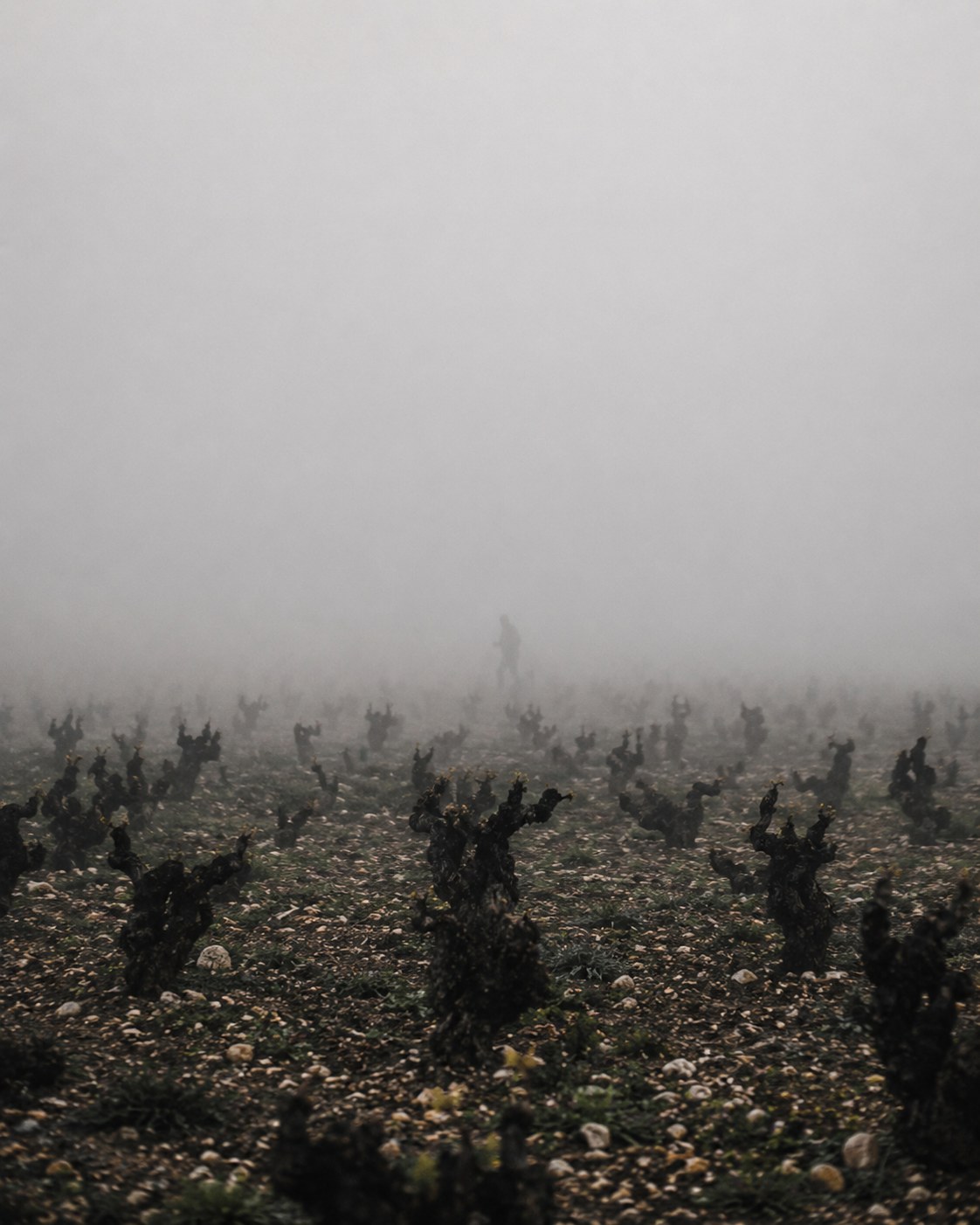
And, above ground, one person walks the rows with a pair of shears and takes between eight and twelve decisions per plant about which wood stays. Multiplied by the plants in nineteen lieux-dits, that is the single largest set of decisions the house takes in a year, and it is taken in silence by somebody working alone.
Every one of those decisions is irreversible for twelve months. There is no way to put a cane back. Whatever is cut in January governs where the fruit will hang in August, how much of it there will be, how much air will move through the canopy and whether the plant will still be productive in twenty years.
"There are eleven weeks in which nobody comes. They are the ones that decide the wine, and they are the only ones we have never charged for." — Trifón
The hardest thing to explain to somebody visiting a vineyard is that a good part of the work consists of not intervening. Not watering when the plant looks thirsty but is merely being asked to send its roots deeper. Not treating when a mark on a leaf is cosmetic. Not picking when the sugars say yes and the skins say wait.
Restraint is not laziness and it is not romanticism. It is the accumulated judgement about which interventions actually improve the wine and which ones simply reassure the person carrying them out. Most of the second kind happen because a calendar demanded activity.
The pause is the season in which that judgement is trained. There is nothing to do, so the only thing available is looking — and looking without the pressure to act is a different exercise entirely from looking while deciding.
There is an idea in this trade, repeated so often it has lost its edge, that the wine is made in the vineyard. Everyone says it. Very few organise their year as if it were true.
Organising the year as if it were true means accepting that the most important weeks are the ones nobody sees, and that they cannot be improved by being made more productive. It means not filling them. It means, in practice, a winery that is shut for eleven weeks and a vineyard that is not.
It also means telling customers the truth about it, which is harder than it sounds. The truth is that between December and March there is nothing here worth their journey, and that this is not a failure of hospitality but the reason the wine is any good.
This notebook comes out four times a year and will always dedicate one issue to these weeks. Not out of contrarianism, but because a house that only shows its harvest is a house showing a tenth of itself.
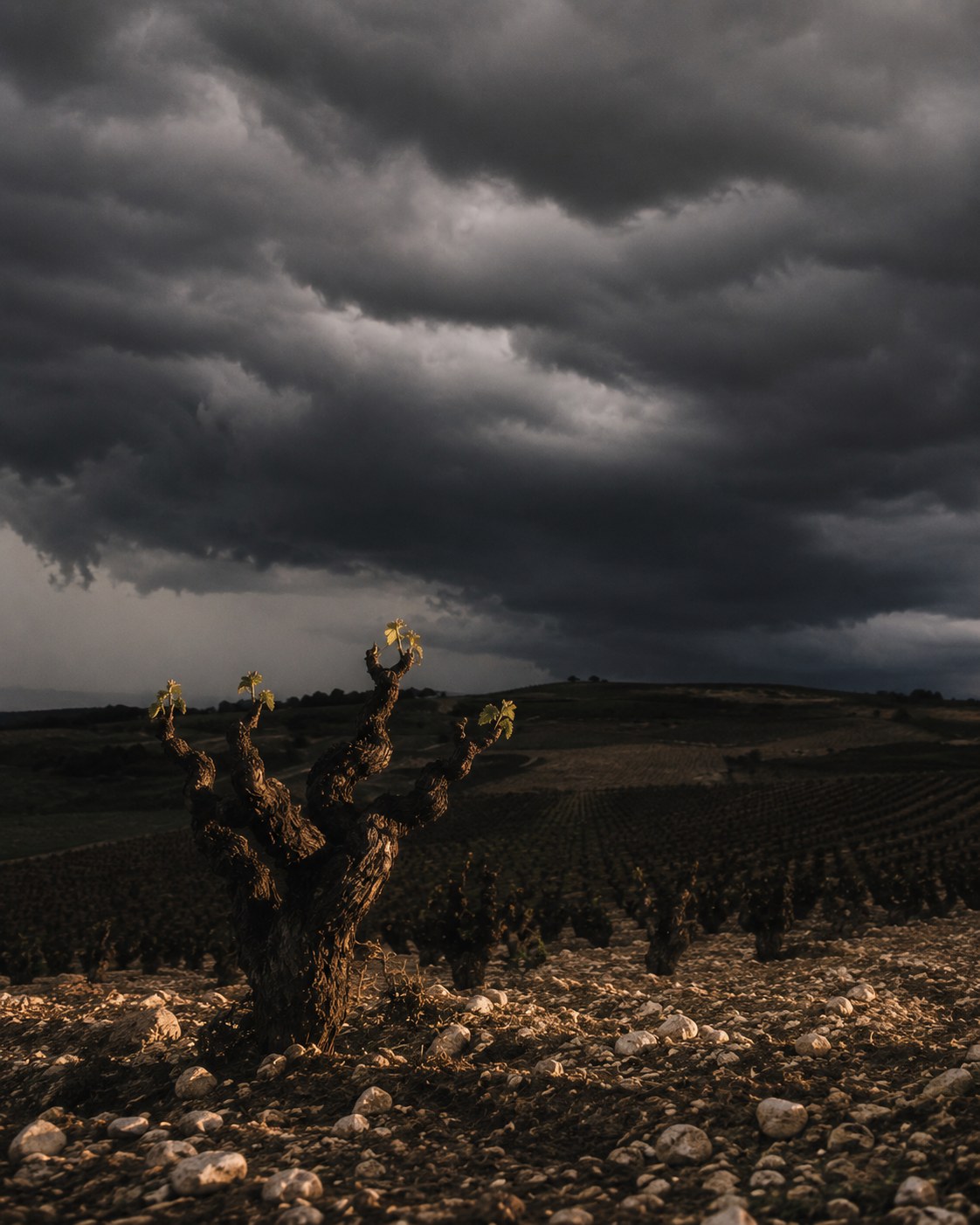
Nine months of the year the vineyard is willing to be photographed. It is green, or it is heavy with fruit, or it is full of people. The other three it is a drawing of brown lines under a low sky, and it is then that a person who has done this for eighty cycles walks out alone and decides what the next vintage is allowed to be.
The pause is not empty4. It is simply the part of the year that does not perform.